William Moulton Marston
Psychologist, theorist, inventor, author and creator of the DISC model

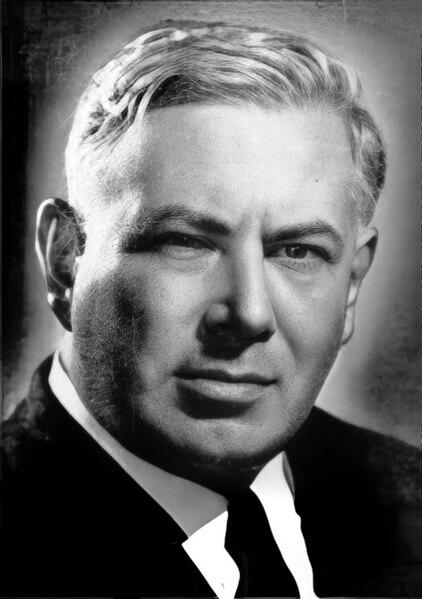
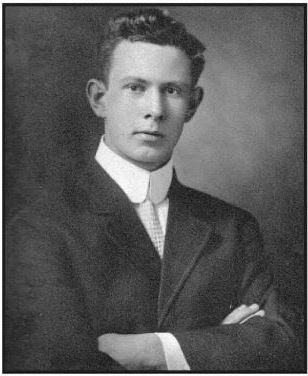
Early Age
Beginnings and Professional Career of Marston
William Moulton Marston, born in the Cliftondale area of Saugus, Massachusetts, was the son of Annie Dalton (née Moulton) and Frederick William Marston. He had an impressive academic career at Harvard University, where he graduated Phi Beta Kappa with a B.A. in 1915, followed by an LL.B. in 1918 and a Ph.D. in Psychology in 1921.
During his years at Harvard, Marston sold his first screenplay, The Thief, to filmmaker Alice Guy-Blaché, who directed it in 1913.
Later, he taught at American University in Washington, D.C., and at Tufts University in Massachusetts. In 1929, William Moulton Marston moved to California, where he worked for a year at Universal Studios as Director of Public Services and taught at the University of Southern California.
Life and Family
An Unconventional Man
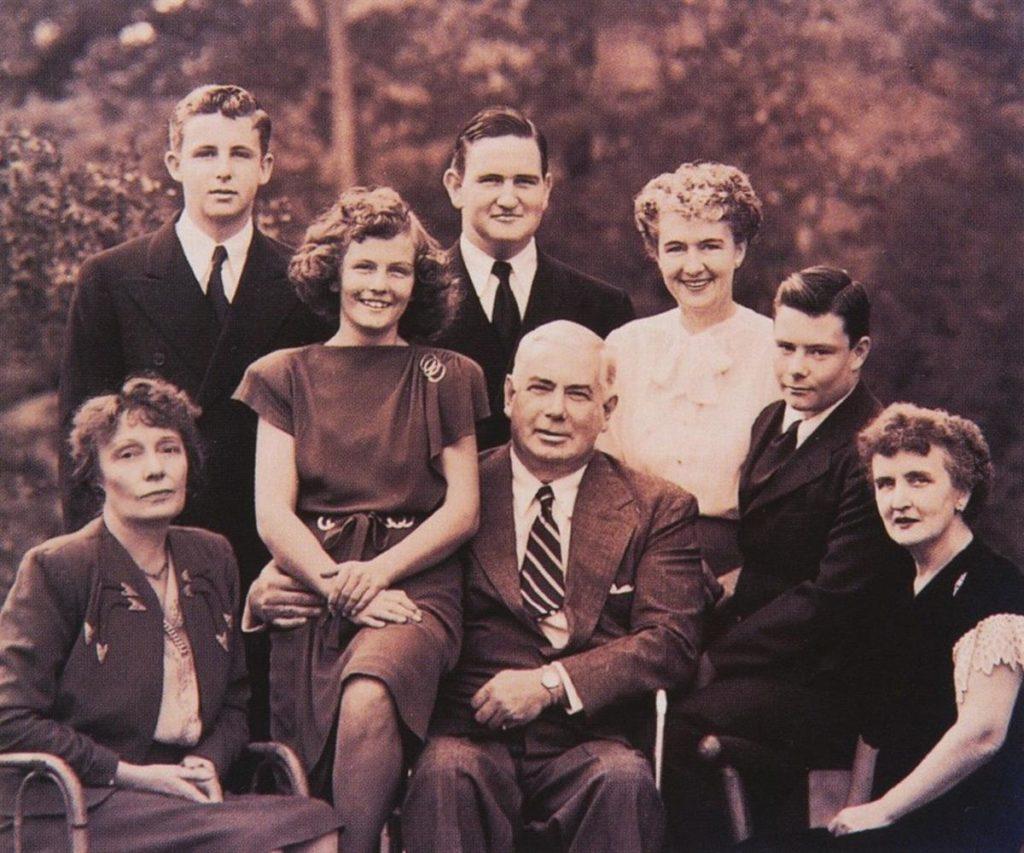
In 1915, Marston married his colleague Elizabeth "Sadie" Holloway. In 1925, he began a relationship with Olive "Dotsie" Byrne, a psychology student he met while teaching. His wife approved of this relationship, and Byrne eventually moved in with the couple in a polyamorous relationship.
Between 1928 and 1933, Marston and his wife had two children, Pete and Olive Ann (named after Byrne), and he also had three children with Byrne: Byrne, Donn, and Fredericka. One of his children later stated that this unconventional family was a wonderful home.
William Moulton Marston died of cancer on May 2, 1947, in Rye, New York. After his death, his two partners continued living together: Olive stayed home to care for the children, while Elizabeth worked as a university professor. This arrangement lasted until Olive Byrne's natural death in 1985.
The Inventor
The First Systolic Blood Pressure Polygraph
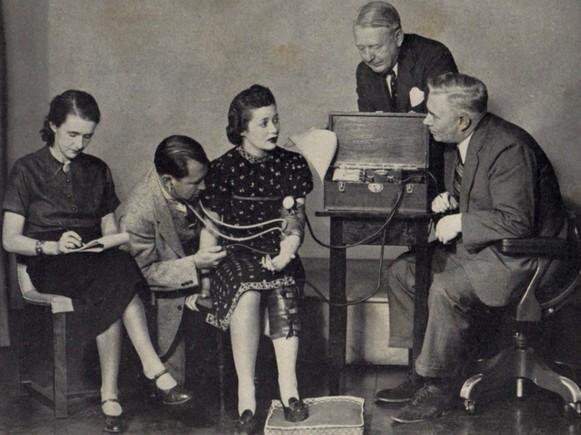
Inspired by his wife Elizabeth, who noticed that her blood pressure rose when she was angry or excited, William Moulton Marston identified a link between blood pressure and lying. This insight led him to create the systolic blood pressure test.
It measured fluctuations in blood pressure through the use of cuffs and a stethoscope during interrogation.
Supposedly, it could detect lies based on changes in readings. Marston's invention laid the foundation for the first practical lie detector.
Based on William Moulton Marston's work, John Augustus Larson later developed the prototype of the modern polygraph in Berkeley, California. The modern polygraph incorporated Marston's systolic blood pressure test as a key element.
Love and Power
Professor Marston and Wonder Woman
On October 25, 1940, The Family Circle magazine published an interview with Olive Byrne. In the article titled "Don't Laugh at the Comics," Byrne, under the pseudonym "Olive Richard," presented Marston's perspective on the educational value of comics. This piece, followed by another in 1942, caught the attention of Max Gaines, a comic book publisher.
Gaines brought William Moulton Marston on board as an educational consultant for National Periodical Publications and All-American Publications, which later became part of DC Comics.
In the early 1940s, DC Comics' roster was primarily filled with male superheroes like Green Lantern, Superman, and Batman. However, an idea from Marston's wife, Elizabeth Holloway Marston, led to the creation of a superheroine.
Marston proposed a hero who would triumph through love rather than violence or force. Elizabeth agreed but insisted that the character be female.
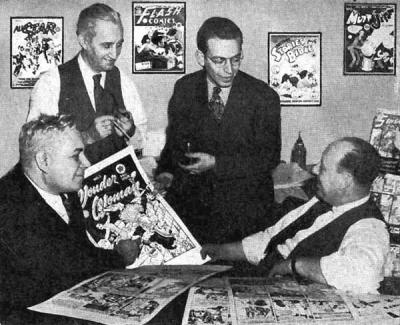
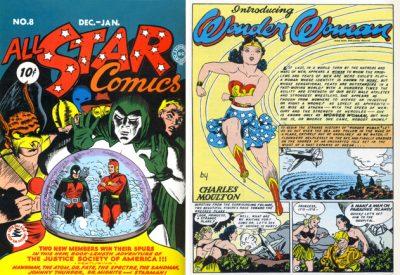
William Moulton Marston presented this concept to Max Gaines, co-founder of All-American Publications. With approval, Marston created Wonder Woman, inspired by the empowered and liberated women of his time. Marston used the pseudonym Charles Moulton during this process.
Marston expressed his views on female empowerment in a 1943 Wonder Woman issue. In The American Scholar, he criticized the lack of strong and compelling female archetypes in society. He argued that the denigration of women's strength was a direct result of their perceived weakness, and proposed a strong, capable, and attractive female character as the solution.
In the 2017 film "Wonder Woman," you can see the characteristics of the four behavioral factors reflected in each member of the protagonist's team: the brave and determined, the sociable and humorous, the calm and tranquil, the quiet and analytical.

The Psychologist and Author
Psychology for "Normal People"
Upon completing his academic journey, Professor Marston immersed himself in exploring the roles of will and power in shaping personality and human behavior.
He expanded his research to include areas such as consciousness, color psychology, primary emotions, and the physical symptoms associated with these emotions. His work in these areas significantly advanced the field of psychology.
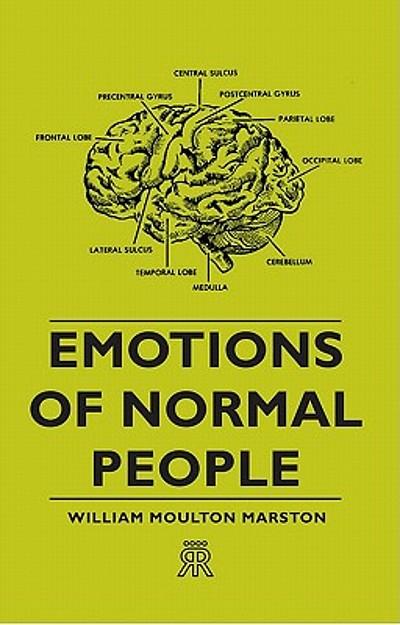
William Moulton Marston was an accomplished writer on popular psychology topics. In 1928, he wrote "Emotions of Normal People", where he elaborated on the DISC Theory.
The DISC theory proposed that people's behavior could be mapped along two axes: one ranging from passive to active attention, and another based on the individual's perception of the environment as favorable or hostile. Both axes intersect to create four quadrants, each representing a distinct behavioral pattern.
In 1931, William Moulton Marston expanded this theory in his book "Integrative Psychology". The DISC Theory was one of the first efforts to apply psychological principles to everyday life outside clinical settings.
We will delve deeper into the theory behind DISC in another section.
Bibliography
Books and Articles by Marston
Books
- "Systolic blood pressure symptoms of deception and constituent mental states." (Harvard University, 1921) (doctoral dissertation)
- (1999; originally published 1928) Emotions of Normal People. Taylor & Francis Ltd. ISBN 0-415-21076-3
- (1930) Walter B. Pitkin & William M. Marston, The Art of Sound Pictures. New York: Appleton.
- (1931) "Integrative Psychology: A Study of Unit Response (with C. Daly King, and Elizabeth Holloway Marston).
- (c. 1932) Venus with us; a tale of the Caesar. New York: Sears.
- (1936) You can be popular. New York: Home Institute.
- (1937) Try living. New York: Crowell.
- (1938) The lie detector test. New York: Smith.
- (1941) March on! Facing life with courage. New York: Doubleday, Doran.
- (1943) F.F. Proctor, vaudeville pioneer (with J.H. Feller). New York: Smith.
Articles
- (1917) "Systolic blood pressure symptoms of deception." Journal of Experimental Psychology, Vol 2(2), 117–163.
- (1920) "Reaction time symptoms of deception." Journal of Experimental Psychology, 3, 72–87.
- (1921) "Psychological Possibilities in the Deception Tests." Journal of Criminal Law & Criminology, 11, 551–570.
- (1923) "Sex Characteristics of Systolic Blood Pressure Behavior." Journal of Experimental Psychology, 6, 387–419.
- (1924) "Studies in Testimony." Journal of Criminal Law & Criminology, 15, 5–31.
- (1924) "A Theory of Emotions and Affection Based Upon Systolic Blood Pressure Studies." American Journal of Psychology, 35, 469–506.
- (1925) "Negative type reaction-time symptoms of deception." Psychological Review, 32, 241–247.
- (1926) "The psychonic theory of consciousness." Journal of Abnormal and Social Psychology, 21, 161–169.
- (1927) "Primary emotions." Psychological Review, 34, 336–363.
- (1927) "Consciousness, motation, and emotion." Psyche, 29, 40–52.
- (1927) "Primary colors and primary emotions." Psyche, 30, 4–33.
- (1927) "Motor consciousness as a basis for emotion." Journal of Abnormal and Social Psychology, 22, 140–150.
- (1928) "Materialism, vitalism and psychology." Psyche, 8, 15–34.
- (1929) "Bodily symptoms of elementary emotions." Psyche, 10, 70–86.
- (1929) "The psychonic theory of consciousness—an experimental study," (with C.D. King). Psyche, 9, 39–5.
- (1938) "'You might as well enjoy it.'" Rotarian, 53, No. 3, 22–25.
- (1938) "What people are for." Rotarian, 53, No. 2, 8–10.
- (1944) "Why 100,000,000 Americans read comics." The American Scholar, 13 (1), 35–44.
- (1944) "Women can out-think men!" Ladies Home Journal, 61 (May), 4–5.
- (1947) "Lie detection's bodily basis and test procedures," in: P.L. Harriman (Ed.), Encyclopedia of Psychology, New York, 354–363.
- Entries on "Consciousness," "Defense mechanisms," and "Synapse" in the 1929 edition of the Encyclopædia Britannica.